Neighborhood by Neighborhood: Discovering Bar NYC
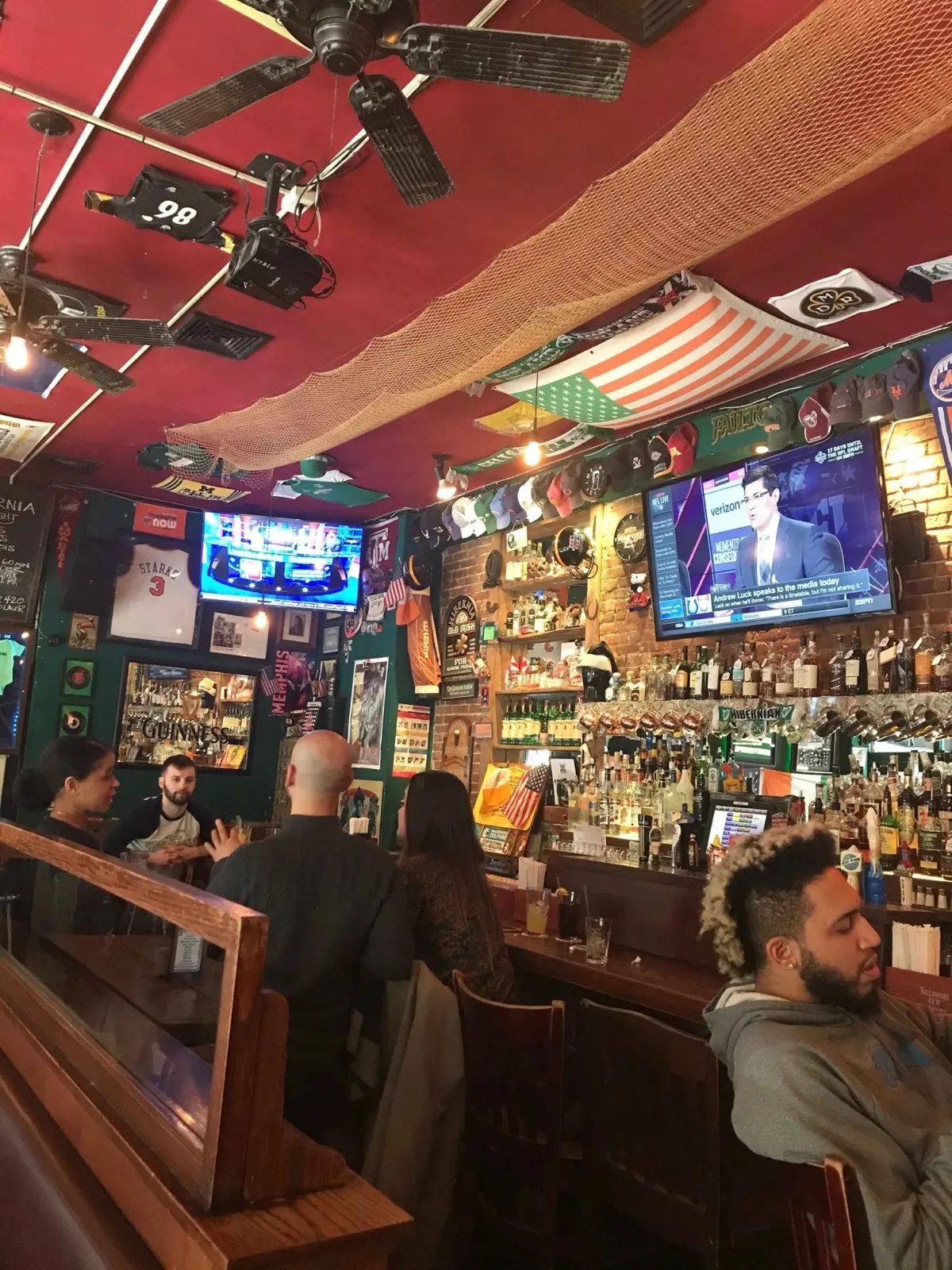
New York is one of the few cities where the phrase Bar NYC can mean almost anything and still be accurate. It can mean a wood-paneled room in the West Village where martinis arrive ice cold and nearly silent. It can mean a loud Bushwick patio under string lights, a Chinatown back room pouring natural wine, a Midtown hotel lounge built for expense accounts, or a corner tavern in Bay Ridge where the bartender knows three generations of one family. That range is the point.
People often talk about New York nightlife as if it were one scene. It is not. The city drinks by neighborhood, and each neighborhood reveals a slightly different version of what people want from a night out. Some want polish. Some want anonymity. Some want music, flirtation, and a shoulder-to-shoulder crowd. Others want one careful drink, a stool, and half an hour without interruption. If you try to understand New York bar culture without understanding its neighborhoods, you miss the texture that makes it distinctive.
What follows is not a ranking and not a checklist. It is a way of reading the city through its bars, with attention to how streets, rents, transit, history, and social habits shape what ends up in the glass and on the room’s walls.
Manhattan below 14th Street, where style became tradition
Downtown Manhattan still exerts an outsized influence on the global idea of a New York bar, even though the city’s most interesting drinking can now happen in every borough. That influence comes from density and memory. In neighborhoods like the West Village, East Village, SoHo, Nolita, and the Lower East Side, bars sit close together enough to turn one drink into four without much planning. More important, these neighborhoods have long trained patrons to expect a point of view.
The West Village remains the place many visitors imagine first. The streets are small, the buildings intimate, and the best rooms understand that the architecture does half the work. In this part of Manhattan, a bar often succeeds by editing itself. The lighting is low but not theatrical. The backbar is curated rather than crowded. Music stays at a level where people can still hear each other. Good operators here know their guests are paying for atmosphere as much as for alcohol. A cocktail that costs a few dollars more can still feel fair if the room is calm, the service is sharp, and the ice is right.
That polish has a trade-off. West Village bars can feel overprogrammed, especially on weekends. A place that is magical at 6:15 p.m. Can become a performance by 9:30. Reservations, lines, and social media fame flatten spontaneity. If you want your New York night to feel effortless, timing matters more here than almost anywhere else. Early evening is often the sweet spot, especially midweek, when locals still outnumber people chasing a famous room.
The East Village offers a different downtown logic. Historically scrappier, still younger at heart, and less interested in understatement, it remains one of the best neighborhoods for variety within a few blocks. Dive bars survive near serious cocktail dens. Beer bars, sake spots, punk-leaning institutions, and tiny date-night rooms all coexist. Rent pressure has changed the mix over the years, but the East Village still rewards wandering. You can begin the evening with a precise stirred drink, get hungry, eat unexpectedly well nearby, and end with a cheap beer in a room that looks as if it has not changed since the late 1990s.
The Lower East Side pushes the energy level up another notch. Here, bars are often extensions of the sidewalk, socially and acoustically. Crowds spill out front. Music is louder. The age range skews a bit younger in many places, though not uniformly. If the West Village excels at mood and the East Village at range, the Lower East Side excels at momentum. It is a neighborhood for people who do not want to commit too early to what the night will become. That openness is useful, but it can also mean the quality spread is wide. A thoughtful bar and a forgettable one may be separated by a single storefront.
Chinatown and the quiet rise of the smaller room
Chinatown has become one of the most compelling drinking neighborhoods in Manhattan, partly because its best bars often resist the old formula of spectacle. The footprint of many spaces is small. The exterior can be modest. The room may not announce itself from half a block away. That scale changes behavior. Guests settle in. Bartenders have less distance to bridge. Service feels more personal, even when the place is busy.
There is also a practical reason the neighborhood matters. People tend to arrive with mixed intentions. Some are there after dinner. Some are on their way somewhere else. Some want wine rather than cocktails. Some want a place that feels discovered rather than broadcast. That creates demand for bars with identity but not too much self-importance. A lot of the strongest rooms in Chinatown understand this balance. They are serious about drinks without turning every order into a seminar.
It helps that the surrounding food culture is one of the strongest in the city. A bar near great late-night eating has an advantage that no décor budget can replicate. New York has always rewarded bars that fit into the rhythm of the block rather than trying to dominate it. Chinatown’s better spots tend to know that. They work because they feel embedded.
Midtown, unfairly dismissed and occasionally excellent
Midtown has a reputation problem. Many New Yorkers treat it as a place to work, pass through, or leave as quickly as possible. That bias misses a practical truth. A well-run Midtown bar can be exactly what the moment requires, especially if you care about service standards, comfortable seating, and reliable execution.
The neighborhood’s bar culture divides broadly into several species. There are old-school business bars where the room still runs on handshakes and habit. There are hotel bars that cater to travelers, conference attendees, and locals who like a little anonymity with their drink. There are pre-theater spots that know how to move people efficiently without making them feel rushed. And there are newer cocktail bars trying to pull a younger downtown crowd north for a round or two.
When Midtown is bad, it is generic in a way that only heavily trafficked commercial districts can be. When it is good, it offers one of the city’s most useful luxuries: competence. Glassware appears when it should. The host stand functions. The bar back keeps pace. If you have ever tried to get one clean, well-made drink in an overhyped room downtown on a Friday at 10 p.m., you know competence is not a minor virtue.
Hotel bars deserve special mention here. In New York, they serve a role beyond the obvious. They are neutral territory. First meetings happen there. Quiet affairs happen there. Solo travelers sit with a book there. Couples dressed for the theater stop in for one round before curtain. On the best nights, a hotel bar in Midtown feels like a temporary city inside the city, full of people who do not know one another and do not need to.
Brooklyn’s split personality, refined and raw at once
Brooklyn’s contribution to Bar NYC is not one thing. It is a cluster of sensibilities spread across neighborhoods that differ sharply in pace and price. Williamsburg, Greenpoint, Fort Greene, Clinton Hill, Park Slope, Cobble Hill, and Bushwick all support serious drinking cultures, but each asks for a different kind of bar.
Williamsburg has become mature enough to contain contradictions. You can still find high-energy spots built around crowds and scene, but the neighborhood also supports excellent cocktail Bar NYC bars, natural wine bars, and comfortable all-purpose rooms where people arrive for one drink and stay for three. The better bars in Williamsburg no longer need to prove they are cool. They can relax. That makes them stronger. Places that once leaned on novelty now compete on hospitality and consistency.
Greenpoint is often more self-contained. The neighborhood rewards bars that feel local, even when outsiders show up in numbers. There is less appetite for pure spectacle and more for places that can function as neighborhood institutions. That may mean a beer-and-shot bar with unusual warmth, a polished cocktail room that never turns stiff, or a wine bar where the staff can guide without showing off. On a good night in Greenpoint, the room feels inhabited rather than curated.
Bushwick remains one of the city’s key neighborhoods for bars that blur categories. Some double as music venues. Some have substantial outdoor space. Some tilt toward nightlife, others toward casual hanging out. The area’s large industrial spaces and younger crowd allow for concepts that would be impossible in tighter, more expensive parts of Manhattan. That freedom brings experimentation, though not always finesse. You can have a memorable night in Bushwick precisely because things are rougher around the edges. You can also end up in a room where sound overwhelms service and no one seems to know who ordered what. It is a neighborhood where flexibility helps.
Fort Greene and Clinton Hill offer a different pleasure. Their bars often feel woven into residential life. You notice people stopping in on the way home rather than making the bar the entire evening’s destination. That changes the emotional temperature. Guests are often less performative. Bartenders build regulars over time. A very good neighborhood bar in this part of Brooklyn does not need much gimmickry because the surrounding streets supply a built-in audience.
Park Slope and Cobble Hill are sometimes underestimated by people chasing constant novelty. That is a mistake. Both neighborhoods have bars that understand a mature night out, one where comfort matters, conversation matters, and no one is trying too hard. Not every evening needs to become a story. Sometimes the mark of a strong bar is that it lets people live their lives inside it.
Queens, where local loyalty shapes the room
Queens is too large and varied for easy generalization, but that is exactly why it matters in any serious conversation about Bar NYC. In neighborhoods like Long Island City and Astoria, bars often reflect a more local pattern of use than destination-heavy parts of Manhattan or North Brooklyn. People come because the place serves their neighborhood well, not just because it has been declared hot.
Long Island City has changed dramatically over the past decade, and its bar scene reflects that transition. New residential towers brought new customers, often people who want quality close to home and do not always feel like crossing the river for a drink. The result is a mix of polished newcomers, hotel-adjacent lounges, breweries, and straightforward neighborhood spots. The challenge in LIC is creating warmth in a landscape that can sometimes feel newly built and slightly impersonal. The bars that succeed usually solve this through staffing and pacing, not decoration alone.
Astoria is one of the city’s most naturally social drinking neighborhoods. It supports sports bars, cocktail spots, beer gardens, hookah lounges, and old-school taverns without forcing them into competition for the same exact crowd. A weeknight in Astoria can feel more grounded than a weekend in trendier districts. People meet after work. They celebrate birthdays without booking private rooms. They stay longer because they are close to home. This local loyalty improves bars in subtle ways. Staff turnover can be lower. Menus can settle. A place can afford to become reliable.
Queens also reminds you that not every successful bar in New York is chasing prestige. Some are built around access, familiarity, and value. There is skill in that. Running a room where people return twice a week for years takes a different kind of excellence than running a reservation-only cocktail destination. Both matter. Only one tends to get written about enough.
Uptown, where history still has muscle
Harlem, Washington Heights, and Inwood bring another dimension to city drinking culture, one rooted more explicitly in local history and community identity. In these neighborhoods, a bar can still feel like part of a block’s social fabric rather than just another nightlife concept.
Harlem’s drinking landscape has grown more varied over time. You can find polished cocktail programs, music-driven spaces, neighborhood taverns, and restaurants whose bar scene is as important as the dining room. The neighborhood’s best nights often involve this overlap between food, music, and drinks. A bar here may not fit neatly into one category, and that fluidity is part of the appeal. Places serve groups with different ages and expectations without losing character.
Farther north, Washington Heights and Inwood often offer something increasingly rare in the city: bars where the crowd is not trying to optimize the evening for content, trend, or status. People are there to see each other, to watch a game, to dance a little, to argue, to celebrate. The drinks may be less precious, but the social life can be richer. For anyone serious about understanding New York, these neighborhoods are instructive. They show how much of a bar’s value lies beyond the menu.
What to notice when you walk into a New York bar
A visitor often judges a bar first by appearance. Locals usually judge it by behavior. The best rooms reveal themselves in small operational details that have very little to do with hype.
- Watch how the staff handles the second wave of orders. A smooth first round proves almost nothing. The test comes when the room fills.
- Listen to the volume level at the bar itself, not just the speakers. If every guest has to lean in hard, the place has chosen energy over conversation.
- Notice whether solo guests look comfortable. Good bars create space for people who arrive alone.
- Pay attention to pacing. A strong bartender can read whether you want another drink, a check, or silence.
- Look at what regulars order. House choices often reveal more than the menu copy.
These signals matter because bars live or die on repeat business. A room can get attention through design and novelty. It earns loyalty through rhythm.
The economics behind the glass
Any honest neighborhood guide to New York bars has to reckon with cost. Rents, labor, liquor pricing, insurance, and licensing pressure everything. That is why two bars pouring similar drinks can feel very different in price and in mood. A cocktail in a tiny downtown room may carry the burden of enormous overhead. A neighborhood tavern farther out may charge less because its business model depends on frequency rather than occasion.
This affects what bars can afford to be. Some need high turnover, so they push standing room and faster service. Some need reservations to control flow. Some rely on food sales to support the beverage program. Others keep the drinks simpler because complexity slows service and raises waste. None of this is inherently good or bad. It is just the math of hospitality in one of the most expensive cities on earth.
It also explains why New Yorkers become so attached to bars that feel fairly priced for what they offer. Fair does not necessarily mean cheap. It means the experience and the bill land in proportion. Most people will forgive a costly martini if the pour is cold, balanced, and delivered in a room worth sitting in. They are less forgiving of mediocre drinks served with attitude under flattering light.
How neighborhoods shape the kind of night you have
One reason the phrase Bar NYC remains so broad is that neighborhoods do more than provide scenery. They influence duration, spending, spontaneity, and even the emotional tone of the evening. If you go out in the West Village, you may make fewer stops because each one costs more and feels more formal. In the Lower East Side, you may move often, spending modestly at each stop but staying out later. In Astoria or Park Slope, the night may center on one dependable room because everyone lives nearby. In Bushwick, the plan may dissolve entirely into movement between patios, warehouses, and late-night food.
This is useful to remember when people ask for the best bar in New York. The question is usually too blunt to be helpful. Better questions are more situational. What kind of room do you want to sit in? Do you care about sound level? Are you meeting friends or hoping to talk to strangers? Is this one drink before dinner, or an entire evening? Do you want polish, looseness, affordability, or surprise? The right neighborhood answers these questions before the bartender even says hello.
A practical way to explore without wasting a night
If you are trying to learn the city through its bars, resist the urge to chase only famous addresses. New York rewards concentration more than accumulation. Pick one neighborhood and give it time. Walk before you sit. Notice who is on the street at 7 p.m. Versus 10 p.m. Look at whether bars are serving couples, large groups, regulars, or tourists. The street tells you plenty.
A simple pattern works well:
- Start with one anchor bar that has a clear identity.
- Move to a second place within walking distance that serves a different mood.
- Leave room for an unplanned third stop if the block suggests it.
- Eat between drinks, even if only lightly.
- End where the room feels easiest, not where the internet told you to finish.
That last point matters. Some of the best New York bar nights end in a place no one would travel across the city to visit. It is simply the right room at the right hour, with the right level of noise, and a bartender who knows how to let the city settle around you.
Why the neighborhood lens matters
Bars are among the clearest mirrors a city has. They show aspiration, stress, taste, habit, and change in real time. In New York, they also show geography with unusual precision. A ten-minute subway ride can alter what people wear, how they order, how long they stay, and what they expect from the person behind the stick.
That is why discovering Bar NYC neighborhood by neighborhood is more rewarding than chasing a universal top ten. The city does not drink in one voice. It drinks in accents. Downtown whispers and performs. Brooklyn experiments and settles down at the same time. Queens builds loyalty. Uptown remembers itself. Midtown, when it gets out of its own way, delivers professionalism that can feel almost luxurious.
Learn those patterns and New York opens up. The bars stop looking like isolated venues and start reading like extensions of the blocks around them. Once that clicks, you are not just finding better places to drink. You are understanding the city more clearly, one neighborhood at a time.
Hibernia Bar
401 W 50th St
New York, NY 10019
(212) 969-9703
FAQ About Bar NYC
What is there to do in Hell's Kitchen, NYC?
Explore the restaurants and bars along Ninth Avenue, catch a Broadway show nearby, or visit the Intrepid Museum on the Hudson River. Hibernia Bar is at West 50th Street and Ninth Avenue, a convenient stop before or after a show.
What are some bars in New York City that serve good food?
Hibernia Bar in Hell's Kitchen serves wings, burgers, fish and chips, and shepherd's pie. Its kitchen lists a 2 a.m. closing time, which makes it an option for dinner after a show or a game.
How far is Hell's Kitchen from Times Square?
Hell's Kitchen is just west of Times Square. From Broadway and West 45th Street, Hibernia Bar is roughly 0.6 miles away, or about a 12-minute walk depending on crowds.